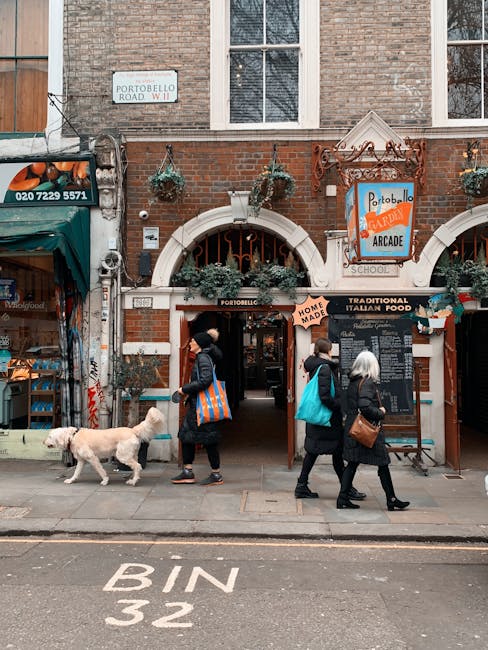
Portobello Road Removals Tips for Market Day Moves
Moving on or near Portobello Road is not your average removal day. On market day, the street has its own rhythm: stalls going up early, visitors drifting in before lunch, narrow access, impatient traffic, and very little room for last-minute chaos. If you are looking for Portobello Road removals tips for market day moves, the short version is this: plan earlier than you think, travel lighter than you want to, and treat timing like it matters because it really does.
Whether you are leaving a flat above a shop, moving into a mews property, or shifting stock for a small business, the difference between a smooth move and a stressful one often comes down to timing and access. In this guide, I will walk you through what makes market day moves tricky, how to handle them without drama, and the practical steps that help protect both your belongings and your sanity. Let's face it, no one wants a sofa wedged behind a produce stall at 8:15 on a Saturday morning.
Table of Contents
- Why Portobello Road removals tips for market day moves matters
- How Portobello Road removals tips for market day moves works
- Key benefits and practical advantages
- Who this is for and when it makes sense
- Step-by-step guidance
- Expert tips for better results
- Common mistakes to avoid
- Tools, resources and recommendations
- Law, compliance, standards, or best practice
- Options, methods, or comparison table
- Case study or real-world example
- Practical checklist
- Conclusion
- Frequently asked questions
Why Portobello Road removals tips for market day moves Matters
Portobello Road is busy on a normal day. On market day, it becomes a different beast entirely. Traders need space to set up, pedestrians fill the pavement edge to edge, and vehicles often have to work around loading restrictions, tight corners, and a lot of stop-start movement. That is why removals here are less about brute force and more about precise planning.
The biggest issue is not just traffic. It is the small, awkward things: a mattress that cannot turn in a stairwell, a van that arrives five minutes too late, a parking space that looked available but was actually needed for loading, or a neighbour who is trying to carry antiques past your doorway at the exact same moment. Tiny delays stack up fast.
For domestic moves, that can mean a long, tiring day. For commercial moves, it can mean missed trading time, lost bookings, or stock sitting in the wrong place at the wrong time. If you are moving a home, a studio, or a small business, a market-day strategy is not optional. It is the difference between "we made it" and "never again."
Key takeaway: the closer your move is to market day, the more your success depends on timing, access planning, and the ability to load quickly and safely.
How Portobello Road removals tips for market day moves Works
A successful move around Portobello Road usually follows a simple principle: reduce friction before the van arrives. That means doing as much as possible the day before, identifying the easiest loading route, and understanding where delays are most likely to happen.
In practice, the process often looks like this:
- Check the day and time carefully. Market activity changes the street's flow, so the exact move window matters more than usual.
- Work out access from both ends. Are you loading from a side street, a mews, a basement flat, or a rear entrance? The route matters just as much as the destination.
- Pre-pack and pre-sort. The less time spent deciding what goes where on moving day, the better.
- Choose the right vehicle size. A bigger truck is not always better if access is tight. Sometimes a smaller man with van setup makes far more sense.
- Load in the right order. First the bulky items, then the boxes, then the essentials you need to reach quickly.
- Keep communication simple. A driver who knows where to wait, where to park, and which items are non-negotiable saves everyone time.
That is the broad shape of it. The details change depending on whether you are moving home, relocating an office, or doing a furniture pick-up, but the core idea stays the same: protect time and access.
If your move involves packing help, it can be worth looking at packing and unpacking support so the actual loading window is shorter and less stressful.
Key Benefits and Practical Advantages
When you plan a market-day move properly, the benefits go beyond convenience. You get more control, fewer surprises, and usually a calmer start to the rest of the week. Sounds simple, but in a busy London street that is a big deal.
- Less waiting around: good timing reduces the chance of sitting in traffic while your belongings are already packed and ready.
- Lower damage risk: fewer rushed lifts and fewer awkward carrying paths mean less chance of scuffs, knocks, and broken handles.
- Better neighbour relations: a tidy, efficient move is much easier on everyone sharing the street.
- More predictable costs: when the job runs to plan, you are less likely to need extra time or a second trip.
- Less disruption to business: for traders and office teams, a clean handover helps protect trading hours and customer access.
There is also a psychological benefit. A move that feels organised tends to stay organised. People are less panicked, the team communicates better, and suddenly you are not hunting for keys, tape, and the kettle all at once. It sounds small. It is not small.
For larger jobs, a dedicated vehicle can help. If you need a bigger load space, take a look at moving truck options or removal truck hire depending on how much you are shifting and how accessible the street is.
Who This Is For and When It Makes Sense
This kind of move is for anyone dealing with Portobello Road's market-day reality. That includes tenants, landlords, homeowners, shop owners, market traders, creatives with studios nearby, and small offices tucked into converted buildings.
It makes particular sense if you are:
- moving from a flat with limited stair access
- handling a same-day key handover
- relocating stock, furniture, or display items
- trying to avoid peak crowding hours
- moving on a weekend because your work schedule leaves no alternative
Not every move needs a full removal crew. For smaller loads, a man and van service can be the cleanest option. For fuller home moves, you may need more structure and more manpower, especially if you are dealing with stairs, fragile items, or a lot of boxes. If that sounds closer to your situation, the home moves service page is a sensible place to compare what you need.
Commercial customers often face a different kind of pressure. If the move involves stock, fittings, or a business reset, the planning needs to be more exact. In that case, commercial moves or office relocation services may be more relevant than a standard domestic job.
Step-by-Step Guidance
Here is a straightforward way to approach a Portobello Road move without getting caught out by market-day chaos.
1. Lock in the timing first
Do not start with boxes. Start with the clock. Decide whether you need an early window, a mid-morning move, or a later slot after the busiest foot traffic has settled a little. On Portobello Road, half an hour can make a surprising difference. Early is usually easier, though not always possible. Truth be told, the best move window is the one that gives you breathing room.
2. Measure access, not just rooms
Room sizes are useful, but access is what makes or breaks the job. Measure stair turns, lift openings, doorway widths, and any tight corners. If you have to carry a wardrobe down a narrow stairwell, you want to know that before the van arrives, not after.
3. Separate essentials from everything else
Pack a small essentials bag with keys, documents, chargers, water, medication if needed, and one basic tool kit. Keep it with you, not in the van. You will thank yourself later when the first tea bag, passport, or phone charger cannot be found.
4. Label items clearly
Use room labels and special-handling labels. "Fragile" is useful, but "glass shelf - top load only" is better. The more specific the label, the less interpretation required on moving day.
5. Stage everything near the exit
The closer your boxes and furniture are to the door, the faster the load. If possible, create a clear path from each room to the exit and keep it free of loose shoes, coats, recycling bags, and that one random chair everyone keeps stepping around.
6. Decide the load order in advance
Put the biggest, heaviest, and most awkward items first. Then add stacked boxes, soft items, and essentials last. If your team has to stop and think about order at the kerb, you lose valuable minutes and, more importantly, momentum.
7. Keep a plan for the final metres
Often the hardest part is not the whole journey but the last twenty metres: the door, the pavement, the van, the moment where pedestrians and vehicles all want the same bit of space. Having someone guide the lift path, open doors, and clear the way can save a lot of awkward backtracking.
Expert Tips for Better Results
Here are the details that tend to separate a tidy move from a messy one.
- Build in a buffer. Even if the schedule looks tight, allow extra time for a stalled lift, awkward parking, or an item that needs extra care.
- Avoid overfilling boxes. Heavy boxes slow everything down and are more likely to split at the worst moment. Nobody needs a box of books bottoming out on the pavement.
- Use furniture protection. Blankets, wraps, and corner protection matter more on narrow streets where a single scrape can happen fast.
- Keep a spare set of hands where possible. If you have one person on the doorway and one person on the van, loading becomes much smoother.
- Think in zones. Not everything should go in the van at once. A staging zone outside the property helps manage flow, especially if the street is busy.
A small but useful habit: make a "first off" pile. That should include the kettle, one toolbox, basic bedding, toilet essentials, and any item you will need immediately. It avoids the classic first-night scramble. We have all been there, or close enough.
If the move includes a single bulky item like a wardrobe or sofa, a focused furniture pick-up can be a smarter, less stressful way to handle it than treating it like a full house move.
Common Mistakes to Avoid
Most moving problems are not mysterious. They are usually predictable, which is annoying but helpful. Here are the traps people fall into most often.
- Assuming the street will be easy to use: Portobello Road does not behave like a quiet suburban road. If you plan like it does, you may be in trouble.
- Leaving packing too late: last-minute packing creates clutter, stress, and forgotten items.
- Choosing the wrong vehicle size: too small means multiple trips; too large may mean access headaches.
- Ignoring stair and doorway measurements: this is where many "it'll fit" assumptions fall apart.
- Not preparing for market footfall: pedestrians, traders, and vehicles all need room. If your plan ignores that, delays are almost guaranteed.
- Forgetting the essentials bag: once the van doors close, your day gets a lot less friendly if your phone charger is buried in box number 18.
One more thing: do not leave waste and unwanted items for "later." That later turns into a mess, especially in a busy area. If you need to dispose of extra items responsibly, a planned recycling and sustainability approach is better than hoping it all sorts itself out.
Tools, Resources and Recommendations
You do not need a huge toolkit, but a few basics make the day smoother. Keep it practical, not overcomplicated.
| Item | Why it helps | Best used for |
|---|---|---|
| Strong tape and labels | Keeps boxes secure and easy to sort | General packing |
| Furniture blankets | Reduces scuffs and impact damage | Tables, wardrobes, white goods |
| Dolly or sack truck | Saves effort on heavier items | Fridges, boxes, compact furniture |
| Plastic wrap | Helps hold drawers, doors, and loose parts together | Cabinets, drawer units, shelving |
| Basic tool kit | Useful for disassembly and quick fixes | Beds, flat-pack furniture, fittings |
For moving support, it is worth matching the service to the job. If you need a simple lift-and-load arrangement, a man with van can be ideal. If you need a more organised team for a full property, a proper house removal setup may be a better fit. You can review house removalists if you want a fuller service approach.
If you are comparing costs or trying to understand what affects the quote, the pricing and quotes information can help you think through the job size, access issues, and any additional handling needs. That is often where the real cost difference sits.
Law, Compliance, Standards, or Best Practice
For London moves, especially in busy commercial or high-footfall areas, compliance is mostly about behaving sensibly and respecting access, safety, and property rules. Exact restrictions can vary depending on the property, building management, and local parking arrangements, so it is wise not to assume anything.
Best practice usually includes:
- checking building access rules in advance
- confirming lift or stair usage where relevant
- avoiding obstruction of pavements, entrances, and loading areas
- keeping items secure during loading and unloading
- making sure fragile or heavy items are carried safely
If your move involves a managed building, ask about time windows, deposit requirements, or move-in procedures well before moving day. Some properties are fairly relaxed, others are, well, less so. A quick email now can save a very awkward conversation later.
From a safety standpoint, choosing a provider with clear policies around lifting, vehicle safety, and insurance is sensible. If you want to understand a company's approach to this side of the job, their insurance and safety information is worth reading. The same goes for health and safety policy details, especially for larger or more complex moves.
It is also reasonable to review how a company handles payments and customer data before you book. The pages covering payment and security, terms and conditions, and privacy policy can help set expectations. Not glamorous, sure, but useful.
Options, Methods, or Comparison Table
Choosing the right moving method depends on space, timing, and how much help you need. Here is a simple comparison.
| Option | Best for | Advantages | Watch-outs |
|---|---|---|---|
| Man and van | Small moves, a few bulky items, flexible timing | Often quicker to book, easier on tight streets | May not suit larger homes or big commercial loads |
| House removals team | Full home moves with many items | More hands, more structure, less lifting for you | Can be overkill for a very small job |
| Moving truck hire | Larger loads and organised transport | Good for volume and repeated trips | Needs more space and planning |
| Commercial move support | Shops, offices, stock, fittings | Better coordination for business disruption | Requires detailed planning |
For many Portobello Road moves, the best option is not the biggest one. It is the one that fits the street, the building, and the timing. That sounds obvious, but people forget it all the time.
Case Study or Real-World Example
Picture a small one-bedroom flat just off Portobello Road. The tenant has a same-day handover, the market is active, and the building entrance is narrow with a turn on the first landing. Not a disaster, but not easy either.
The move works best when the packing is finished the night before. The sofa is wrapped and staged near the door, boxes are grouped by room, and the essentials bag is kept separate. The van arrives early, before the street gets much busier. One person stays at the entrance to manage flow while another loads items in order: mattress, sofa, drawers, boxes, plants, then the small loose bits that always end up everywhere if you leave them until last.
What makes the move go well is not speed alone. It is the lack of hesitation. Nobody is deciding where the tape is, nobody is wandering off to find the keys, and nobody is trying to push a wardrobe through a doorway at the same time as someone else is coming in with a lamp. It is tidy. Not perfect, but tidy.
That same approach works for small commercial relocations too. For example, a boutique may use a commercial moves service to shift stock and display fittings early in the morning, before customer footfall builds. Different job, same idea: reduce friction, keep the path clear, move in a controlled way.
Practical Checklist
Use this checklist the day before and again on the morning of the move.
- Confirm the moving time and access window
- Check the parking or loading plan
- Measure the largest items and the tightest routes
- Pack an essentials bag
- Label all boxes clearly
- Disassemble furniture where practical
- Protect fragile items and corners
- Keep walkways clear inside the property
- Separate items for disposal or recycling
- Have keys, paperwork, and contact details ready
- Set aside water and a quick snack, because moving day does drag a bit
- Do one final sweep of cupboards, sockets, and under beds
If you are moving a business or need more detailed handling, a service like office relocation services can help keep the process orderly. For smaller loads, a simpler setup may be all you need. Either way, the checklist stays useful.
Conclusion
Portobello Road removals are manageable when you treat market day as a planning challenge, not a surprise. The street is busy, the access can be tight, and the timing matters more than people expect. But with the right preparation, the right vehicle, and a realistic load plan, you can move without turning the day into a scramble.
The best Portobello Road removals tips for market day moves are surprisingly straightforward: pack early, choose access-friendly transport, keep the route clear, and respect the fact that the street is working on its own timetable. That alone will save a lot of stress.
If you are still weighing up your options, start with the job itself, not the van. The right support is the one that fits your building, your timing, and the amount of lifting you actually need. Simple enough, really. And when it goes well, you do notice the difference straight away.
Get a free quote today and see how much you can save.
If you want to learn more about the company behind these services, you can also read about us and decide whether the approach suits your move.
Frequently Asked Questions
What is the best time to move on Portobello Road during market day?
Earlier is usually better because traffic, footfall, and loading pressure tend to build through the day. The ideal window depends on the exact property and access point, but a quieter early slot is often the easiest to work with.
Can I still move if the market is open?
Yes, but you need a tighter plan. Expect slower loading, more care around pedestrian flow, and possibly a smaller vehicle if access is limited. Market-day moves can work well, they just need more discipline.
Is a man and van enough for a Portobello Road flat move?
Sometimes, yes. If the load is modest and the access is manageable, a man and van setup can be a very practical choice. Larger homes or awkward furniture may need more support.
How do I know if I need a bigger truck?
If you have multiple large items, lots of boxes, or a long carry distance, a bigger vehicle may save time. But on narrow or busy streets, bigger is not always better. Access matters as much as capacity.
What should I pack separately for moving day?
Keep keys, documents, chargers, medication, water, and basic tools with you. A small first-night bag is also smart, so you are not digging through boxes just to find toothpaste or the kettle lead.
How can I reduce damage during a busy street move?
Use proper wrapping, protect corners, avoid overfilled boxes, and keep a clear route between the property and the van. Most damage happens when people rush or carry awkwardly in tight spaces.
Do I need to tell my building management before moving?
In many cases, yes. Some buildings have access rules, time windows, or loading expectations. It is worth checking early so you are not caught out on the day.
What if my furniture will not fit through the doorway?
Measure in advance and, where possible, disassemble items before moving day. If a piece is especially awkward, ask the mover whether partial dismantling or an alternative route is possible. A little planning goes a long way here.
Are there special considerations for business or shop moves?
Definitely. Stock, fixtures, trading hours, and customer access all need to be considered. A commercial move usually needs a clearer schedule than a standard home move.
How far in advance should I book?
As early as you can, especially if you are moving on a weekend or around a busy market period. Early booking gives you more choice on timing and vehicle type, which makes life easier.
What happens if the move runs over time?
It is common enough, especially in busy areas. A good plan includes a buffer so a delay does not derail the whole day. This is one of those moments where an extra 30 minutes feels like a luxury.
Can I arrange help with packing too?
Yes, and for many people that is the difference between a frantic move and a controlled one. If you want the loading side to be faster and calmer, packing and unpacking support can make a real difference.