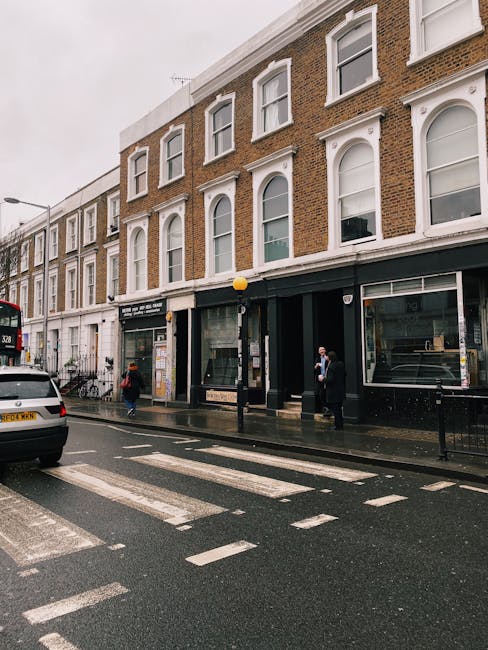
W10 Loading Bay Rules and Moving Day Fines: A Practical Guide for Stress-Free Moves
If you are moving in or out of W10, the loading bay outside your building can make the day feel either organised or completely chaotic. One wrong stop, one blocked entrance, one expired bay booking, and suddenly you are dealing with delays, complaints, or moving day fines that nobody budgeted for. This guide on W10 loading bay rules and moving day fines breaks the whole thing down in plain English so you can plan properly, avoid the usual traps, and keep the move moving. Truth be told, it is often the tiny logistics that cause the biggest headaches.
Whether you are moving a flat, an office, or a few bulky items, understanding loading bay access, permit expectations, waiting restrictions, and how enforcement tends to work can save you money and a lot of stress. And if you are using a professional team, it is still worth knowing the basics yourself. A good move starts with good positioning - literally.
Table of Contents
- Why W10 loading bay rules and moving day fines matter
- How W10 loading bay rules and moving day fines work
- Key benefits and practical advantages
- Who this is for and when it makes sense
- Step-by-step guidance
- Expert tips for better results
- Common mistakes to avoid
- Tools, resources and recommendations
- Law, compliance, standards, and best practice
- Options, methods, and comparison table
- Case study or real-world example
- Practical checklist
- Conclusion
- Frequently asked questions
Why W10 loading bay rules and moving day fines Matters
Loading bays are not just a convenience. They are part of the moving strategy. In a busy part of West London, access can be tight, neighbours can be impatient, and enforcement can be fast. If you arrive assuming the van can simply pause outside for as long as you need, you may find out very quickly that assumptions are expensive.
Moving day fines usually happen because the vehicle is in the wrong place, there is no valid loading arrangement, the bay is being used longer than allowed, or the vehicle has drifted into a restricted zone while everyone is carrying boxes upstairs. It happens. People are focused on mattresses, mirrors, and the kettle, not bay markings on the road. That is exactly why planning matters.
The real issue is that a loading bay is often shared space. It may be used by residents, tradespeople, delivery drivers, office teams, and removal crews all on the same street. One person's convenience can become another person's ticket. A well-organised move avoids that tension and keeps the van where it should be: close enough to work efficiently, but compliant enough to stay out of trouble.
Expert summary: The cheapest moving day is usually the one that starts with a proper loading plan. If the van has clear access, the crew can work faster, the risk of delays drops, and the chance of penalty notices becomes much lower.
That is especially useful if you are arranging a man and van service or a larger move where timing is tight. In both cases, the loading point is not an afterthought. It is part of the job.
How W10 loading bay rules and moving day fines Works
At a practical level, loading bay rules are about location, timing, and permitted use. The exact setup can vary from street to street, and some bays are governed by resident permits, timed loading only, or shared business use. If your move is happening in a managed block, the building may also have its own instructions for vehicle access, lift use, and booking the loading area. It can feel like a lot, but once you split it into parts, it becomes manageable.
Think of the process in three layers:
- The road space - where the vehicle can stop, for how long, and under what rules.
- The building access - whether a bay, forecourt, or service entrance needs to be booked in advance.
- The move itself - how quickly the team can load and unload before restrictions start to bite.
Moving day fines usually arise when one of those layers breaks down. A van that is technically "just parking for a minute" may still be treated as loading, waiting, or stopping in a way that is not allowed. That distinction matters. To be fair, it is one of those transport rules that feels annoying until you are the person trying to keep a street open.
Timing is another big factor. Some loading bays are available only during certain hours, and some allow active loading only, meaning the crew needs to be visibly moving items. A van left sitting while everyone disappears inside for "just one more box" can attract attention. If your move spans rush hour, school-run traffic, or a busy weekend, the risk climbs again.
If you are planning a home move, a service like home moves support can help you coordinate the practical side so the vehicle and the loading slot work together rather than against each other. Same idea for office or commercial work, where access windows are often stricter.
Key Benefits and Practical Advantages
Getting the loading bay side right gives you more than just peace of mind. It changes the rhythm of the day.
- Less waiting time: The crew can get straight to work instead of circling the block looking for somewhere legal to stop.
- Lower risk of fines: A planned bay strategy reduces the chance of penalty notices, clamping issues, or complaints from neighbours.
- Better handling of fragile items: Shorter carrying distances mean less chance of knocks, drops, and awkward balancing acts with wardrobes and white goods.
- Smoother communication: Everyone knows where the vehicle should be and who is responsible for access at each stage.
- Cleaner handover: Whether you are leaving a property or moving into one, a tidy loading setup helps the whole day feel more under control.
There is also a cost benefit that people sometimes miss. Every extra minute spent hunting for access adds pressure on labour time, fuel, and schedule overlap. If the bay is ready and the route is clear, a move can often feel shorter even when the actual item count is the same. Funny how that works. Less friction, less stress.
For business moves, this matters even more. An office team that is trying to relocate desks, monitors, filing cabinets, and boxes of paperwork cannot afford to lose half an hour because the vehicle is at the wrong kerbside. A well-timed commercial plan, such as an office or commercial move, reduces disruption and helps staff get back to normal sooner.
Who This Is For and When It Makes Sense
This guide is useful for a lot of people, but especially for anyone moving in a dense urban setting where kerb space is limited and traffic is rarely on your side. If that sounds like your situation, you are in the right place.
- Home movers who need a van close to the front door or building entrance.
- Flat sharers dealing with narrow streets, basement steps, or limited stopping space.
- Landlords and letting agents helping tenants move without upsetting the neighbours.
- Office managers who need a clean, efficient relocation window.
- Local traders and small businesses collecting stock or equipment from a site with restricted access.
It also makes sense if you are hiring a man with van for a smaller job, such as a few large items, because smaller moves are sometimes where people relax too much. That is when loading rules get forgotten. A single sofa still needs a legal stopping point.
If you are moving a full household, or combining your move with packing support, you may also want to look at packing and unpacking services so the crew can work more efficiently once they reach the bay. Less clutter at the van means less time exposed to fines and delays. Simple, but effective.
Step-by-Step Guidance
Here is a straightforward way to plan around W10 loading bay rules and moving day fines without overcomplicating things.
- Check the access point first. Don't start with boxes. Start with the van space. Confirm where the vehicle can stop, whether a loading bay exists, and whether any permit or booking is needed.
- Ask the building about restrictions. Some blocks have concierge rules, lift booking slots, or service entrance procedures. A five-minute call can save an hour later. Honestly, that call is boring - and wildly useful.
- Match the vehicle to the job. A larger van or truck is not always best if the road is tight. A smaller, more manoeuvrable option can sometimes be the smarter choice.
- Build your timeline around the bay window. Work backwards from the time the vehicle can legally load. If your crew arrives too early, you may be paying people to wait.
- Pre-pack and stage items near the exit. Place boxes, bags, and dismantled furniture as close as possible to the door, without blocking fire exits or corridors.
- Keep documents and contact numbers handy. If someone needs to confirm access on the day, don't bury the number under a tape gun and a pile of labels.
- Assign one person to access control. One point of contact reduces confusion. No, everyone does not need to answer every question. That gets messy quickly.
- Leave a margin for traffic and loading delays. Even a well-planned move can be slowed by lift waits, parking congestion, or weather.
If the move involves bigger equipment, a dedicated vehicle option such as moving truck hire or removal truck hire may be more appropriate. The important thing is not the label, but whether the vehicle can work within the available space.
And if you are still comparing options, it is sensible to review pricing and quotes early. That way you can see how access, vehicle size, labour needs, and timing might affect the overall cost.
Expert Tips for Better Results
Small improvements make a real difference here. In practice, the best loading bay plans are the ones that look a bit almost too organised.
- Photograph the bay and road signs ahead of time. It helps avoid confusion on the day, especially if several people are arriving separately.
- Label fragile and awkward items clearly. A wardrobe moved slowly is better than a wardrobe moved twice.
- Use a colour-coded room system. It speeds up unloading and reduces the time the vehicle spends in the bay.
- Keep hallways and entrances clear. If the route between the bay and the lift is blocked, your loading time stretches out fast.
- Plan for the last item as carefully as the first. The final sofa or filing cabinet is often where the day becomes sloppy.
One useful habit is to appoint someone who stays near the vehicle when items are being moved. They do not need to direct everyone like a film set. Just a bit of awareness. If a parking officer appears or the loading time is nearly up, that person can respond quickly.
If you are moving furniture on its own, a targeted furniture pick-up can be a neat option because the job is usually quicker and the access can be planned around a single collection point. That often means fewer moving parts. Fewer moving parts, fewer surprises. Nice.
Common Mistakes to Avoid
Most moving day fines are not caused by one dramatic error. They come from little oversights stacking up. A lot of them are very avoidable.
- Assuming the van can stop anywhere outside the property. A "quick stop" is not always a legal stop.
- Ignoring the exact loading window. If the bay only allows loading for a limited period, stretching beyond that is risky.
- Forgetting to check whether the bay is shared. Shared bays often come with stricter expectations.
- Letting the crew wait while you finish packing. That delays the job and may force the vehicle to sit longer than planned.
- Not accounting for lift queues or stair access. It sounds minor. It rarely is.
- Using the wrong size vehicle. Too large and you cannot manoeuvre; too small and you need extra trips.
- Leaving no buffer for enforcement or traffic. London traffic has a talent for turning "we're nearly there" into "we're suddenly late."
There is also a mental mistake people make: treating moving day as a series of individual tasks rather than one connected system. If the access point is wrong, everything else slows down. If the packing is poor, the loading bay gets blocked. If the timetable is too optimistic, the chance of fines rises. It is all connected.
Tools, Resources and Recommendations
You do not need fancy software to manage a loading bay move well. A few simple tools are enough.
- A printed move schedule with arrival times, access details, and contact names.
- Boxes, labels, and tape so the team can recognise rooms quickly.
- A measuring tape to confirm tight gaps, stair widths, or vehicle loading dimensions.
- Phone photos of road signs, bay markings, entry points, and any building instructions.
- A basic toolkit for dismantling beds, shelves, or office furniture.
It also helps to work with a provider that takes logistics seriously, not just transport. If you want to understand the business side of the service, the company's about us page can help you judge whether their approach feels practical and professional. For anything involving higher value goods or tighter timing, check the insurance and safety information before you book.
If your move has a sustainability angle - maybe you are decluttering before a move or clearing out old furniture - it can also be worth looking at recycling and sustainability. Not everything needs to end up in a landfill just because it is going out the door.
For more specialised help, a team offering house removalists may be a better fit for full-property moves, while a focused man and van option can suit smaller, more flexible jobs. The right setup depends on the access, the volume, and how sensitive the loading bay timings are.
Law, Compliance, Standards, or Best Practice
It is sensible to be careful here. Parking, loading, and stopping rules can differ by council, street layout, and local traffic orders, so any move in W10 should be checked against the specific location rather than guessed from general habits. That is especially true in busy residential streets or mixed-use zones where loading spaces may be closely managed.
From a best-practice point of view, the safest approach is to treat the loading bay as a controlled access point, not a casual parking space. Follow any posted instructions, keep the vehicle within the permitted window, and make sure the loading activity is genuine and continuous where required. If the bay is time-limited, use that time actively and efficiently.
Professional movers also have responsibilities around safe lifting, vehicle positioning, route protection, and clear communication. Good practice usually includes:
- keeping entryways and emergency exits clear
- using appropriate vehicle sizes for the site
- protecting walls, floors, and doorframes where needed
- planning manual handling sensibly
- checking insurance and terms before the move begins
If you are booking a move for a business, service quality matters as much as speed. A team that understands timing, access control, and the realities of commercial buildings will usually be a better choice than the cheapest option on paper. Cheap can become expensive if the access plan is weak. Seen it happen.
For detailed service terms, payment expectations, and practical conditions, it is wise to review terms and conditions and payment and security before confirming a booking. That gives you a clearer picture of what is included, what may change, and how your booking is handled.
Options, Methods, or Comparison Table
Different moving approaches suit different access situations. Here is a simple comparison to help you think it through.
| Option | Best for | Loading bay impact | Main advantage |
|---|---|---|---|
| Man and van | Small to medium household items, flexible collections | Usually easier to position in tighter streets | Quick, agile, often practical for short loading windows |
| House removalists | Full home moves, multi-room properties, larger loads | Needs stronger access planning and longer bay use | Better for end-to-end support and bigger inventories |
| Moving truck | Large volume moves or bulky furniture | Can be harder on narrow roads or tight bays | More space in fewer trips |
| Furniture pick-up | Single-item or small collection jobs | Often the simplest loading pattern | Efficient for quick, focused stops |
If your access is particularly restricted, smaller and more agile solutions often reduce the risk of moving day fines because they spend less time battling the kerbside. But if you have a full household to clear, trying to squeeze everything into a tiny van can create multiple trips and more exposure. There is a balance to strike, and it is not always obvious at first glance.
Case Study or Real-World Example
Imagine a couple moving out of a second-floor flat near a busy W10 street. The property is fine, the boxes are ready, and the only issue is access. At first, they think the van can simply wait outside while they carry everything down. Then they notice the road has a marked loading bay with a limited window, plus a second bay shared by nearby businesses. Suddenly the plan changes.
Instead of arriving early and hoping for the best, they book the vehicle to land exactly when the bay opens. They stage the boxes by the front door the night before, label fragile items clearly, and keep one person outside to watch the timing. Because the move is organised in the right order, the crew loads quickly, the lift is used efficiently, and the van leaves within the permitted period. No drama. No ticket. Just a very normal, slightly dusty moving day.
Now compare that with the version where nobody checks the bay rules. The van arrives, but the space is occupied. The crew circles the block. By the time they finally stop, time is already slipping away and someone is muttering about fees. One little planning gap can do that.
That is why people looking into office relocation services or other time-sensitive moves should always ask about access first. Not after the boxes are packed. Before.
Practical Checklist
Use this simple checklist before moving day. It is not glamorous, but it helps.
- Confirm the exact loading bay location
- Check the allowed loading time window
- Ask whether permits, visitor authorisation, or booking are needed
- Verify the vehicle size suits the street and entrance
- Measure awkward furniture if access is tight
- Stage packed items close to the exit
- Keep hallways, stairwells, and fire exits clear
- Assign one access contact for the day
- Save key phone numbers in your device
- Build in a delay buffer for traffic, lift waits, or weather
- Review the booking terms and safety details
- Arrange parking or loading confirmation in advance if needed
If you are comparing costs or trying to keep the day within budget, it is also sensible to ask whether the provider can adapt the vehicle type to the access. Sometimes the right answer is not the biggest truck. Sometimes it is the smarter one.
Get a free quote today and see how much you can save.
Conclusion
W10 loading bay rules and moving day fines can feel like a small detail until they are the thing that slows everything down. Once you understand the basics - where the van can stop, how long it can stay, and what counts as proper loading - the whole move becomes much easier to manage. That is the real win here: less uncertainty, fewer surprises, and a smoother day for everyone involved.
The best approach is simple. Check the access early, match the vehicle to the space, keep the crew informed, and leave yourself a little breathing room. If you do that, the loading bay stops being a problem and starts being part of the plan. And that makes a big difference when the day is already full of boxes, tape, noise, and the occasional missing kettle. Moving is still moving, of course, but it does not have to be messy.
A calm move is still possible, even on a busy West London street.
Frequently Asked Questions
What are W10 loading bay rules in simple terms?
They are the local rules that control where a moving van can stop, for how long, and whether the vehicle is allowed to load or unload in that bay. The exact rules depend on the street and the property access, so checking beforehand is always the safest move.
Why do moving day fines happen so often?
Usually because the vehicle stops in the wrong place, stays too long, or is left waiting in a bay without following the local loading conditions. It is often a timing problem, not a dramatic mistake.
Can a removal van use a loading bay if it is only for a few minutes?
Sometimes, yes, but only if the bay rules allow it and the loading activity is genuine. "Just for a minute" sounds harmless, but the rules do not always treat it that way. Better to confirm than hope.
Do I need a permit for a loading bay in W10?
It depends on the exact location and the type of bay. Some spaces may need authorisation, while others are restricted by time or usage rules. Check the property instructions and the local signage before moving day.
What should I do if the loading bay is already occupied?
Do not improvise blindly. Contact the building, the property manager, or the relevant access point and decide whether you can wait legally, use an alternative space, or reschedule the arrival window. A rushed decision can create a fine very quickly.
Is a small van better than a large truck for W10 streets?
Not always, but often yes if the street is narrow or access is limited. A smaller vehicle may be easier to place in a tight loading bay, which reduces time lost to manoeuvring. For larger households, though, too small a vehicle can mean extra trips.
How can I reduce the risk of moving day fines?
Plan the access early, confirm the bay rules, use the correct vehicle size, and keep the loading process active and efficient. It also helps to have one person in charge of access so nothing gets lost in group chat chaos.
Do office moves face the same loading bay issues as home moves?
Yes, and sometimes more so. Offices often have tighter time windows, building management rules, and more equipment to move. A little access planning goes a long way in those cases.
What if I need help with packing as well as loading?
Then it may be worth combining your move with support such as packing and unpacking services. That can speed up the loading process and cut the time the vehicle spends in the bay.
Should I book a man and van or a full removal service?
Choose based on volume, access, and timing. Smaller loads with tighter access often suit a man and van setup, while full property moves usually benefit from a more complete removal service. The bay rules should be part of that decision.
Where can I check service details before booking?
It is sensible to look at the provider's service pages, safety information, and booking terms before confirming anything. That way you know what is included, how access is handled, and what to expect on the day.
What is the most common mistake people make on moving day?
Underestimating the access problem. People focus on boxes, furniture, and cleaning, then realise too late that the loading bay, the van size, or the timing window is the real bottleneck. Happens more often than you'd think.